
You come over a snowy ridge and the trees below are on fire with colour: red, orange and yellow poplars dropping leaves onto a carpet of litter, shelf mushrooms jutting from fallen logs, and a tent and a dead campfire half hidden in the shrubs. That’s the dappled forest, the heart of Wilderness Bound, which arrived on September 15, 2026 as Java Edition 26.3 and Bedrock Edition 26.50.
A forest made for autumn
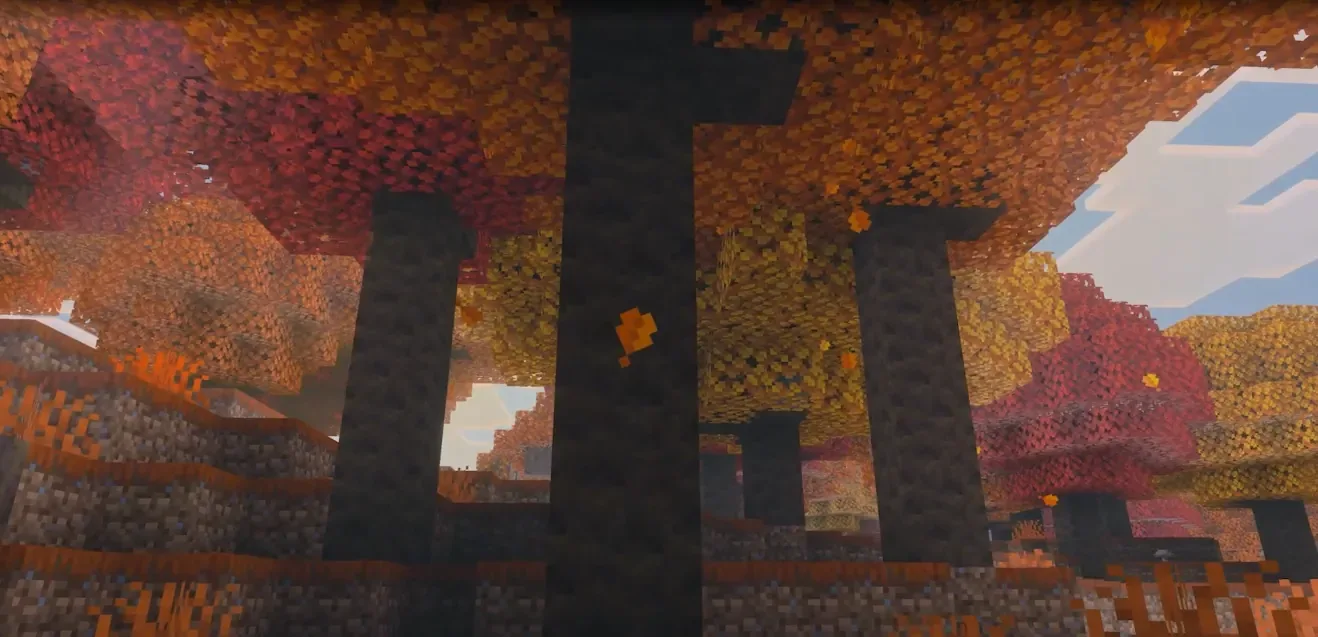
Mojang first showed the biome at the bonus Minecraft Live at TwitchCon in May 2026. The name Wilderness Bound came later, during MC Championship: Fall Stars. Despite its warm colours, the dappled forest counts as a cold biome and spawns near them, so passive mobs here use their cold variants. Poplar saplings grow into red, orange or yellow trees at random, each with matching falling-leaf particles. If you can’t find the biome, wandering traders sometimes sell the saplings.
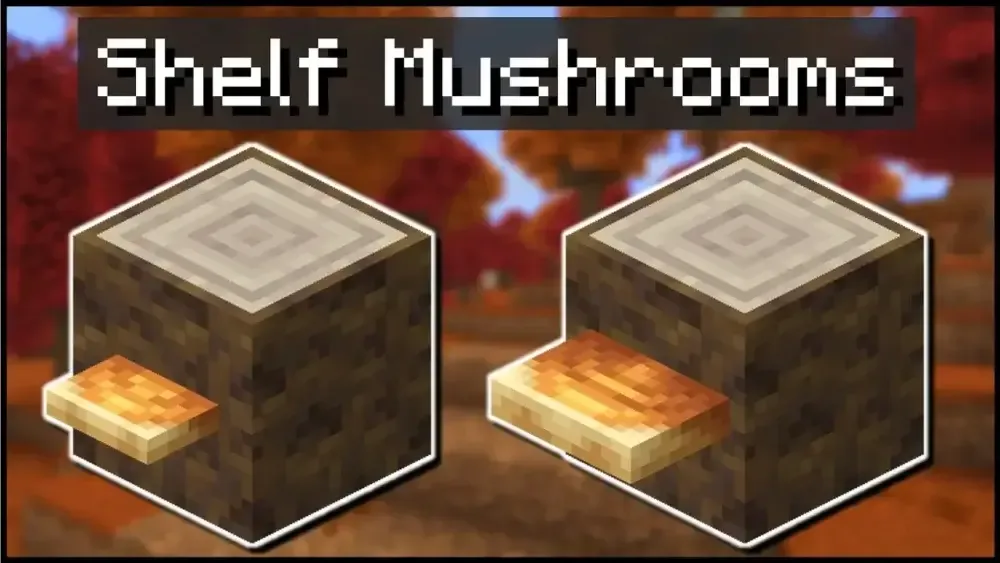
The forest floor got just as much attention. Red shrubs grow in small patches and spread with bone meal. Shelf mushrooms grow on standing and fallen poplars in small and large sizes. Large ones bounce you like a bed and drop two when broken, and both count for mushroom and suspicious stew.
Key facts
- Released: September 15, 2026. Java 26.3, Bedrock 26.50.
- New biome: dappled forest, with poplar trees, fallen poplars, red shrubs and shelf mushrooms.
- New structure: abandoned camps in 18 biomes, with loot and new explorer maps.
- New blocks: a full poplar wood set, cushions, straw beds, and wool and concrete stairs and slabs in all 16 colours.
- Java testing: 10 snapshots, 3 pre-releases and 3 release candidates. The final build matched RC2.
Camps that send you somewhere else
The second big addition turns exploring into a trail. Abandoned camps (a tent, a campfire and a few chests and barrels) generate in 18 biomes, each with its own design, from cherry groves and swamps to the pale garden and badlands. Their chests hold the update’s new explorer maps. Eight of them lead to other camps, in the bamboo jungle, cherry grove, birch forest, dappled forest, flower forest, pale garden, swamp and windswept forest. Others point to structures such as ancient cities, trial chambers and woodland mansions.
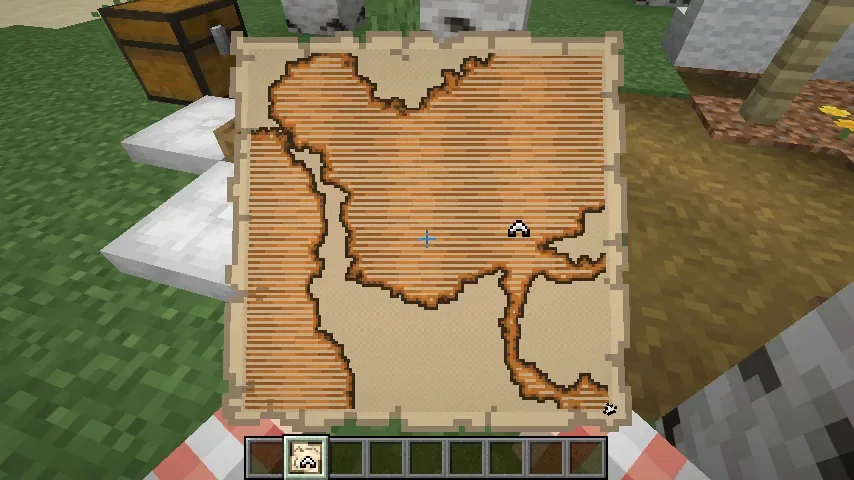
Maps changed too. Explorer maps are now separate items with their own icons, the player marker points the way you’re facing, and explorer and treasure maps can no longer be zoomed out.
Somewhere to sit, somewhere to sleep
For the first time in Minecraft, you can sit down. Cushions are crafted from three matching wool slabs in any of the 16 colours. Right-click one to sit. You can walk through them, pistons can’t move them, and they break if the block underneath goes.
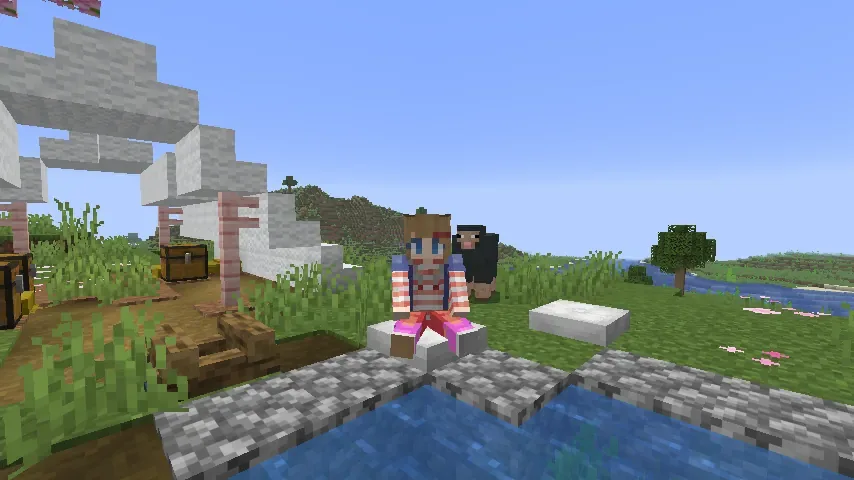
Straw beds are made for the road: three hay bales make four. Sleeping in one skips the night without moving your spawn point, and the bed is used up afterwards. Try it in the Nether or the End and it’s destroyed, though it won’t explode like a normal bed. Builders also got wool and concrete stairs and slabs in every colour, which they had wanted for years.
The changes you don’t see at first
- Improved Transparency renders water, glass and overlapping particles more accurately. It costs performance on weaker PCs, and F3 + X toggles it.
- World Options replaces the pause menu’s “Open to LAN” button, putting game mode, difficulty, commands, game rules and LAN access in one place.
- Realms invite codes: owners can create up to five codes, each lasting from 30 minutes to 7 days or never expiring, and can pause or delete them.
- Realms render distance: the cap on Java Realms rose from 12 to 25 chunks, with separate sliders for render and simulation distance.
- Under the hood: Java moved to SDL3 for windowing, and
/executegained aslotscondition for map makers.
What happens next
Wilderness Bound is a quiet drop, about wandering rather than combat, and most players welcomed that after the physics chaos of Chaos Cubed. The next update to reach Java is the Ice Caves drop, and after that the Sift dimension in 2027. Our Minecraft Live 2026 guide has everything Mojang announced.