The short version: Chaos Cubed released on June 16, 2026 as Java Edition 26.2 and Bedrock Edition 26.30. Its centrepiece is the sulfur caves biome and the sulfur cube, a passive slime-like mob that swallows a block and takes on that block’s physics. It also added sulfur and cinnabar block sets, geysers, a Java friends list, an experimental Vulkan renderer and a fix for the Hardcore LAN exploit.
- 26.2Java version (Bedrock: 26.30)
- 12Sulfur cube physics types
- 16Java test builds before release
- ~50sBetween geyser eruptions
When did Chaos Cubed come out?
June 16, 2026, on both editions at once. Mojang revealed it at Minecraft Live in March 2026 and confirmed the date at the May broadcast. Java went through a long test cycle first:
Source: Minecraft Wiki, Java Edition 26.2
What do sulfur cubes do?
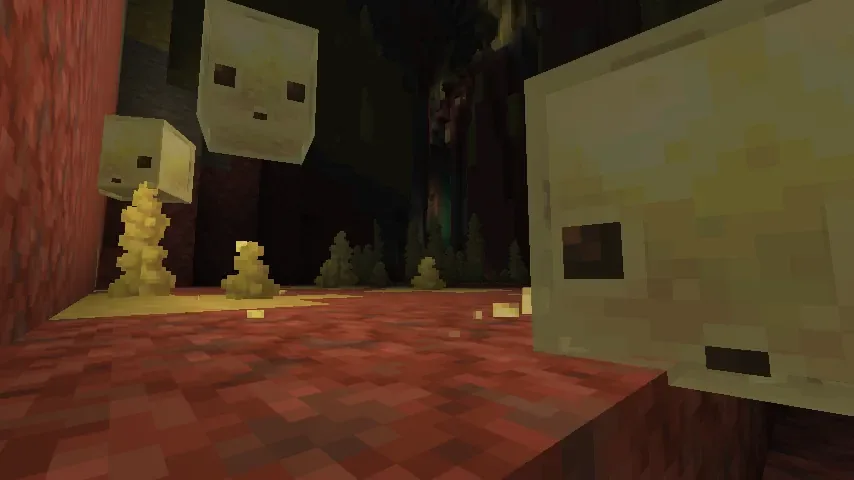
Sulfur cubes spawn in sulfur caves and hop around, ignoring players. Give one a block and it absorbs it. The cube then stops moving, becomes immune to damage and takes on that block’s physics, so you can hit it around like a ball. Killing a cube splits it into two smaller ones. You can grow small cubes back to full size with slimeballs and scoop large ones up with an empty bucket. A cube will also follow you if you’re holding a block it can absorb.
| Absorbed block | Type | How it moves |
|---|---|---|
| Grass / dirt | Regular | Medium speed and bounce. Floats |
| Oak log | Bouncy | Fast, high bounce. Floats |
| Stone | Slow bouncy | Slow, high bounce. Sinks |
| Moss block | Fast flat | Fast, low bounce. Sinks |
| Block of iron | Slow flat | Slow, low bounce. Sinks |
| White wool | Light | High bounce, high air drag |
| Blue ice | Fast sliding | Fast, no bounce, almost frictionless |
| Red mushroom block | Slow sliding | Slow, no bounce, low friction |
| Soul sand | High resistance | Very slow, high friction |
| Honeycomb block | Sticky | Extreme friction, no bounce |
| Magma block | Hot | Damages anything it touches |
| TNT | Explosive | Can be lit and explodes after a 6-second fuse, or 0.75–3 seconds if set off by another blast |
The examples above come from AllThings.How’s archetype breakdown. Each type covers a family of similar blocks. The TNT cube earns the “Uh Oh” advancement, and technical players turned it into guided explosives and launchers within days of the first snapshot.
What is in the sulfur caves?

- Sulfur and cinnabar bands: pale yellow and deep red stone, each with a full building set (stairs, slabs, walls, polished and brick variants).
- Sulfur pools: water over potent sulfur gives Nausea to anything that wades in.
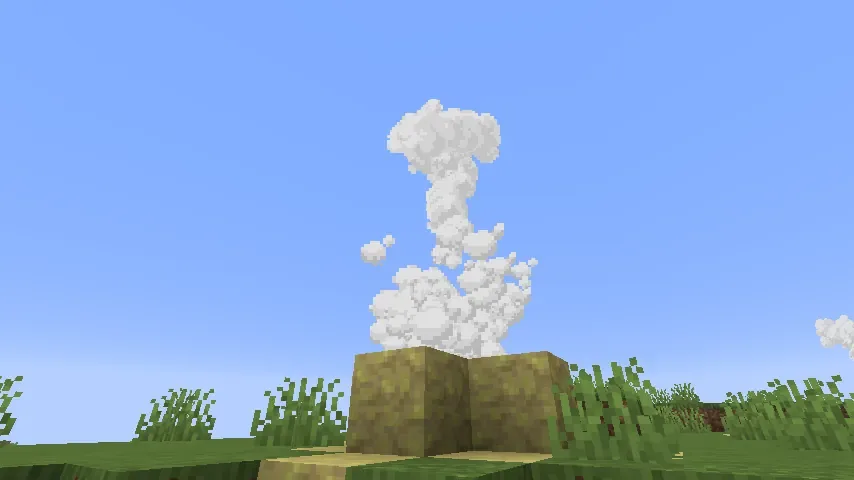
- Geysers: potent sulfur above a magma block, under one to four water sources, erupts about every 50 seconds. It throws players, mobs and items upward without damaging them, and more water means a higher launch. Lava underneath makes the eruption continuous, and sculk sensors detect it.
- Sulfur spikes: falling stalactites that hurt. Four craft into a sulfur block, and wandering traders sell them.
- Cave spiders spawn naturally here instead of regular spiders, outside mineshafts for the first time.
- “Bounce” music disc in mineshaft chest minecarts inside sulfur caves, plus five new background tracks by fingerspit.
What changed for Java players beyond the caves?

- Friends list: a built-in friends list with online status, added from the main menu.
- Experimental Vulkan renderer: an opt-in setting that replaces single-threaded OpenGL. Mojang says it’s the groundwork for Vibrant Visuals on Java. GPUs older than roughly 2014 (pre-Maxwell or pre-Polaris) may not support it, and Mojang has asked modders to stop making direct OpenGL calls. Vulkan was briefly the default during testing before Snapshot 8 switched the default back to OpenGL for release. Vulkan finally became the default in the first 26.4 snapshot.
- Hardcore LAN exploit closed: Open to LAN is greyed out in Hardcore worlds, and a new
/unpublishcommand closes an integrated server without leaving the world. - Beds are no longer block entities: they now use normal block models, so resource packs can remodel them without mods, and rooms full of beds cost less to render.
What did Mojang change or remove during testing?
| Build | Change | Reaction |
|---|---|---|
| Snapshot 3 | Sulfur cubes could no longer ride in boats. Potent sulfur could no longer be crafted back into sulfur. Sulfur spikes became farmable and renewable. | Technical players who had built around boat transport called it a step backwards |
| Snapshot 3 | Beds converted from block entities to block models | Welcomed by resource pack makers |
| Snapshot 7 | Friends list added, with peer-to-peer hosting to open singleplayer worlds to friends. Players compared it to the popular Essential mod’s world hosting. | Hailed as Java finally catching up with Bedrock |
| Pre-release 1 | Peer-to-peer hosting removed. Mojang said it wasn’t ready for all players. The friends list stayed. | Disappointment, though dedicated servers were unaffected |
| Pre-release 3 | A fix for attribute swapping (switching items mid-attack to keep weapon attributes and enchantments) was reverted for unrelated technical reasons. Mojang promised a proper fix later. | PvP players annoyed that a known exploit survived into release |
| Pre-release 5 | Hardcore LAN exploit fixed | Broadly praised |
What did Bedrock players get?
Bedrock 26.30 shipped the same caves, cubes and blocks. Bees can also now be bred with chorus flowers and spore blossoms, and skeleton arrow timing now matches Java. Texture streaming is on by default on supported hardware, and dedicated servers ship with the allowlist enabled.
Was Chaos Cubed worth it?
Opinion split along a familiar line. Critics, especially long-time survival players, called it decoration with little effect on progression. They argued that the sulfur cube shines in multiplayer chaos but means little in a solo world, and saw the drop as proof that Mojang’s smaller-drop model had replaced big updates. Supporters pointed to the depth of the cube’s physics system, the Vulkan groundwork and the Hardcore fix as real long-term gains. Some argued that “Mojang can never win”: players ask for polish, then call a polished drop thin.
What’s clear is that the cube created a new technical sandbox, for better and for worse. The same physics later turned up in server-crashing exploits. For the drop before this one, see our Tiny Takeover guide.