For fifteen years the complaints about Java Edition have sounded the same: slow start-ups, hungry memory, stutters when the garbage collector kicks in, servers that buckle when a crowd shows up. Players learned to live with it, then learned to patch it with Sodium, Lithium and FerriteCore. Horizon takes a different route. It doesn’t patch the game. It replaces it, line by line, in a different language.
A rewrite that started in October
Horizon is an open source project led by Ludovic Marie (ludovic111 on GitHub). The Polish site minecraft.pl reports that work began in early October 2026 and passed 4,000 commits within three weeks. The goal is what the project calls one-to-one vanilla parity with Java Edition 26.3: same saves, same rules, same terrain from the same seed, just running as one native program with no Java underneath.
How it got that far that fast is part of the story. The project’s own documentation says most of the code was written by Claude AI agents and by contributors using their own AI tools, with humans steering and reviewing rather than typing every line. To keep that honest, Horizon leans on testing instead of trust: more than 300 “differential harnesses” feed the same inputs to the real game and to Horizon, then compare the outputs.
The benchmark that turned around
The first numbers people shared in late October were mixed. On an RTX 4080, Horizon averaged 2,993 FPS at 12 chunks against vanilla’s 2,600, but at 32 chunks it fell behind, 672 to 849. Memory was the clear win: 1.6 GB against 3.3 GB.
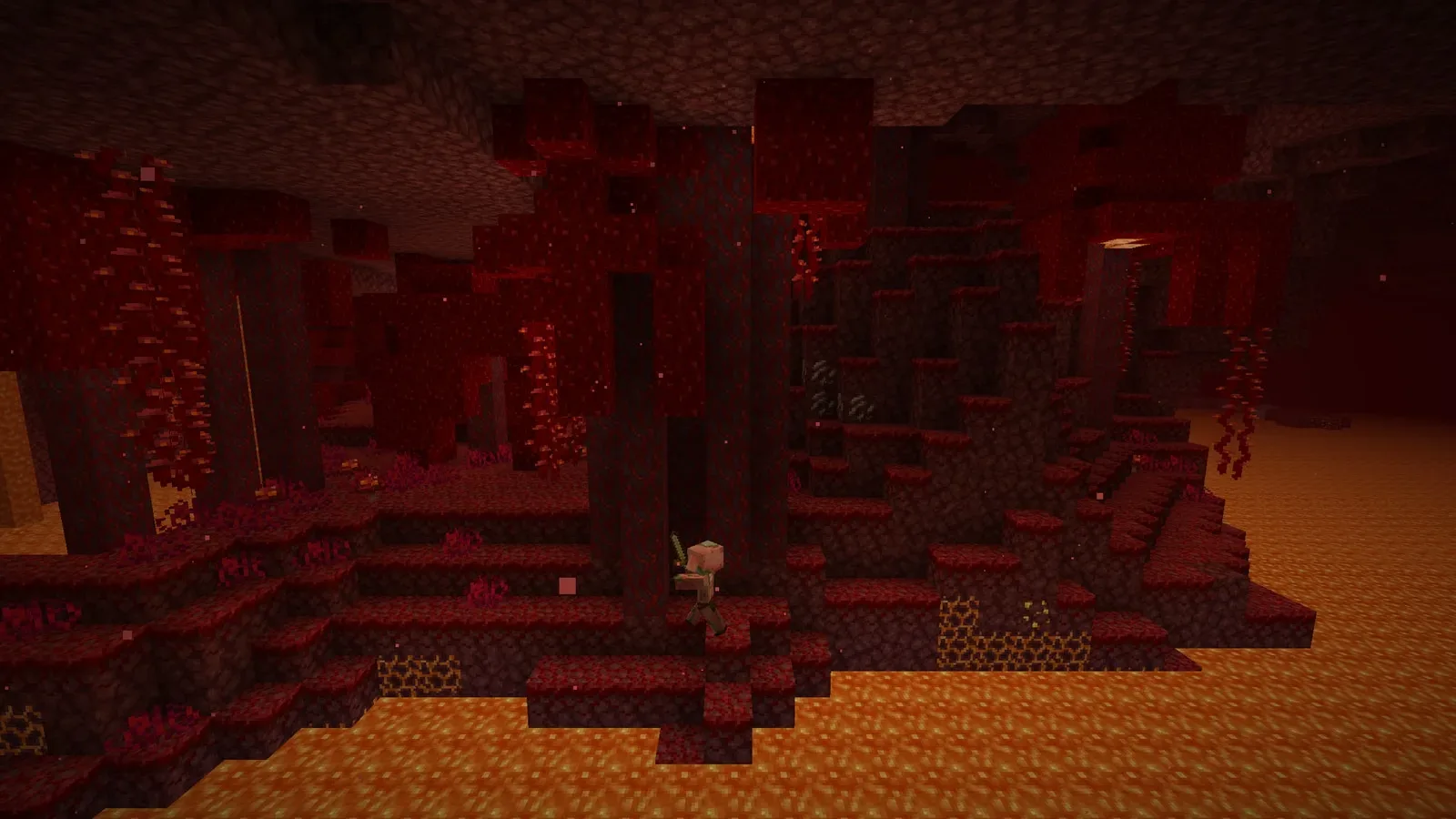
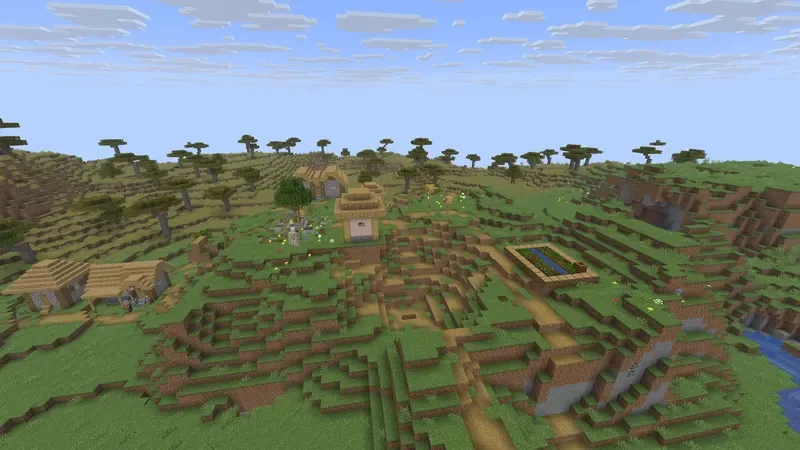
A week later the project published a new round on a Ryzen 7 9800X3D and RTX 5080, flying the same path over a village, a forest, an ocean and a mountain on seed 1234. This time Horizon v0.2.97 led at every distance, including against vanilla running Sodium, Lithium, FerriteCore and ImmediatelyFast. Average FPS, with the slowest 1% of frames in brackets:
| Render distance | Horizon v0.2.97 | Vanilla 26.3 | Vanilla + mods |
|---|---|---|---|
| 8 chunks | 3,289 (1,327) | 2,437 (640) | 2,375 (709) |
| 16 chunks | 2,074 (598) | 1,661 (375) | 1,586 (432) |
| 32 chunks | 1,207 (333) | 1,031 (176) | 879 (264) |
The averages are nice. The 1% lows are the real headline: roughly double vanilla’s at every distance, which is what you feel as fewer stutters. Horizon also reached the title screen in about 3 seconds against vanilla’s 7.5, and held 1.1 to 1.7 GB of memory while playing, against 1.9 to 2.9 GB. These are the project’s own tests on one high-end PC, so treat them as a strong signal, not gospel.
What works, and what doesn’t yet
Single player, LAN, multiplayer on vanilla 26.3 servers, resource packs and invite codes to bring friends into your world all work today. Horizon also ships its own server, a single 46.8 MB program with no Java, which the project measured holding 20 TPS with 50 bots in a test where vanilla’s watchdog shut its own server down.
The gaps are just as clear, and the team lists them openly. Java mods don’t run, because there is no Java: Fabric and Forge content can be partly ported, and Horizon has its own mod format that’s still young. Shader packs are being rebuilt. Very far render distances, older-version servers, low-end machines like the Steam Deck, phones and the browser are all still on the roadmap. And some small vanilla behaviours, like pistons pushing entities, aren’t finished yet.
Before you install it
- You need to own Java Edition. Horizon contains no Minecraft code or assets. Its launcher signs in with a Microsoft account that owns the game and builds what it needs from your own copy.
- Get it from the source. Download only from playhorizon.dev or the official GitHub releases. Fake “faster Minecraft” downloads are a favourite malware trick, as the wave we covered in our mod malware guide shows.
- Check server rules. Horizon joins normal servers, but big networks have their own rules about unusual clients. If you play somewhere with strict anti-cheat, ask before you switch.
- It’s unofficial. The project states it is not approved by or associated with Mojang or Microsoft.
What comes next
The roadmap’s near-term work is long render distances, faster world generation for modpacks and closing the last vanilla differences, followed by help for weaker hardware, a server console and a redesigned launcher. If it keeps this pace, Horizon could become the first serious alternative to the way Java Edition has run since 2009. For now it’s the most interesting experiment in Minecraft performance this year, and the best part is that you can try it on the copy you already own. If you’d rather stay on vanilla, our performance mods guide is still the safest way to more frames.